(a dreamscape)
The Whistling Isles
A rocky outcrop in the North Atlantic has been officially recognised as the ancient home of the mysterious Eagle People, who for centuries captured the imaginations of storytellers and truth seekers.
As with many great legends, kernels of truth are contained within those whisperings. Myths map journeys that connect communities and cultures. They reinforce relationships between the cosmos and the everyday.
For the Eagle People, whose existence in the past has been a subject of debate, this is a pivotal moment in their story, a metamorphosis from myth to history.
As archaeologists uncover a long hidden world contained within a network of underground caves, ancient truths are being revealed and stories brought to the light.
Cave Dwellings
Since the discovery of ancient artefacts, there has been a public fascination with the Whistling Isles, a remote archipelago sitting more than one hundred miles north west of the Scottish mainland.
At just 7.5 square miles in size, Eilean Nam Bruadar is home to a significant cave network. It sits between two smaller rocky outcroppings, Teine and Maidne.
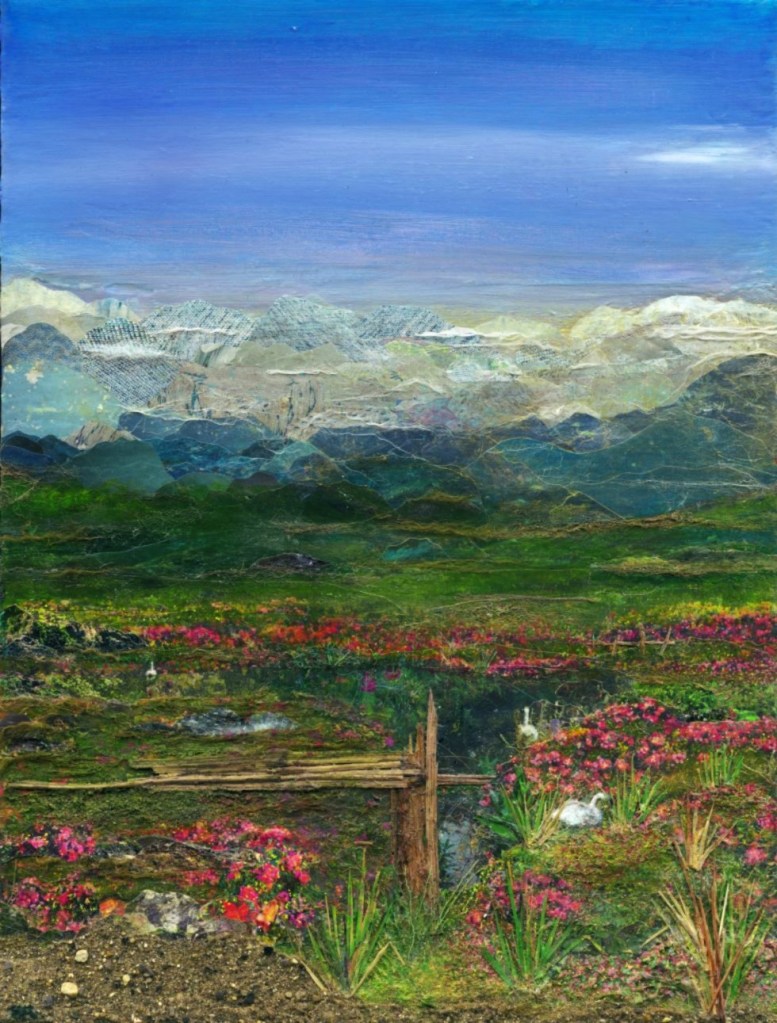
Because of the often difficult crossing from the mainland and the exposed nature of the landing spots, the islands are only accessible by boat during the summer months. The last crofting families left for the mainland over fifty years ago; however, writers and artists continue to make the islands their sanctuary for part of the year.
One such writer is Elna Kerr, who, while exploring an underground cave on Eilean Nam Bruadar, discovered hidden gold and bronze artefacts believed to be more than 4,000 years old. The finds indicate an ancient people with a close partnership with their namesake.
Following Kerr’s discovery, archaeologists set up camp on Bruadar to explore its underground cave network and begin to solve a riddle that has intrigued storytellers for centuries.
With much thanks to the research team, an exhibition is currently being prepared to showcase some of the artefacts from this wondrous find.
(Please tap Exhibition Showcase to visit)

You are cordially invited to walk through time, to journey between worlds, to connect with the ancient guardians of the sea.
You are also invited to share stories you may have heard about the Whistling Isles and the Eagle People and to share your thoughts on the relationship between language and landscape, between myth and culture.
You can do so by following this link or by sending an email to thewhistlingisles@eabharois.art
The following is a little of the mythology and history associated with the Eagle People.
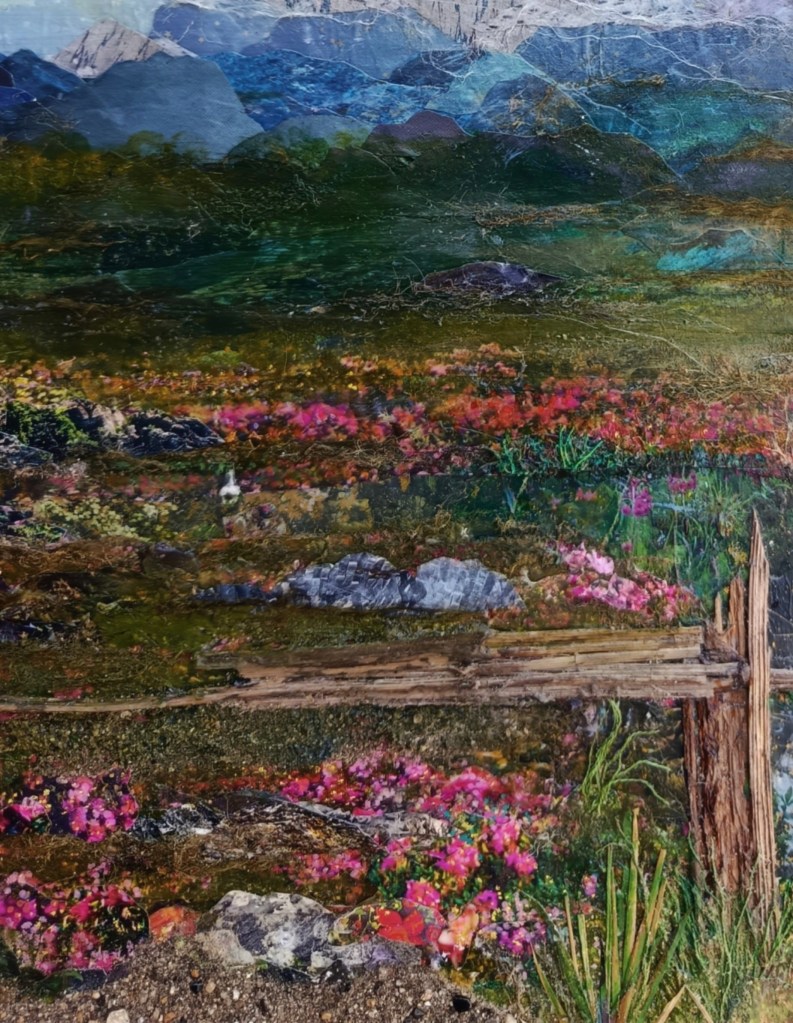
Ancient Guardians
Formed c 370 million years ago during a period of mountain formation, the Whistling Isles were later separated from the mainland by rising water levels.
Thousands of years ago, they were covered in woodland, which, over the subsequent millennia, began to slowly disappear due to changes in climate.
Until now, written accounts of the Eagle People were relegated to dusty library shelves, where they shared space with fables.
Stories speak of the Eagle People’s gift of flight, of how they would take the form of their namesake to fish and hunt. During inclement weather they were said to guide boats to safety with their unique whistling call, which some say can still be heard from the mainland before a storm.
Some folklorists believe the origins of these myths can be found in Norse mythology, whose legends portray a bird greatly revered for maintaining harmony and balance. As the protector of creation, the eagle is celebrated in Norse mythology for inspiring bravery and encouraging honour.
The first known reference to the Whistling Isles appears in the 10th Century manuscript, Leabhar na Mara where it is said that the inhabitants of Na h-Eileanan Feadalaich were protectors of the veil and guardians of wisdom, who possessed foresight and knowledge. They were recorded as embodying the link between the material and spiritual worlds.
Artefacts on Exhibition
- A gold half mask eagle pendant
- A gold flying eagle pendant
- A gold disc pendant
- Four gold brooches with a garnet inlay
- An ornate bronze pendant
- A bronze brooch
Responses
(shared with permission)
I am interested to learn more about Alna’s discoveries on Eilean Teine, which I believe translates as Fire Island. Could there have been a beacon there at one time, one that was kept lit by the islanders? My little piece of research tells me that before the development of clearly defined ports, mariners were often guided by fires built on hilltops. (Cait)
reply: Thank you Cait for your feedback. I will relay it to Alna, who is currently compiling a book of island stories. Her grandmother came from Eilean Teine, so Alna may be able to shed light on that!
 Éabha Róis