Introduction
This exhibition will be showcased in the second act of Book of the Sea, which will also feature stories and artwork inspired by the envisioned Eagle People.
Act I: Leabhar na Mara
Act II: The Whistling Isles
As part of the developing art book, people are invited to share their stories through Scéalta na Mara. This link provides more information about the art book. Scéalta na Mara will form its own chapter in the final book.
If you would like to participate, please first have a look at this developing exhibition (below), and, afterwards, feel free to share your thoughts and ideas.
Thank you so much for your interest and participation.
Welcome
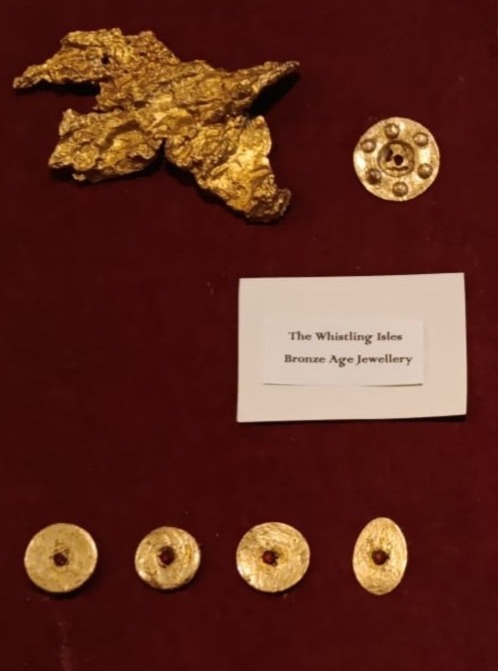
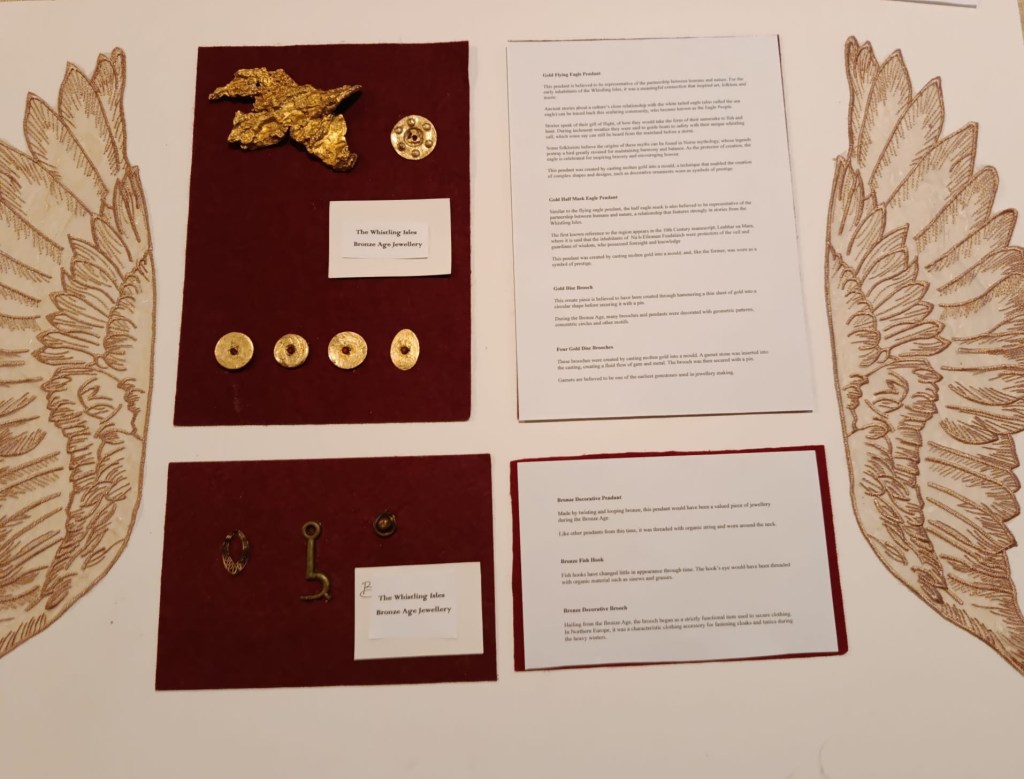

Gold Flying Eagle Pendant
This pendant is believed to be representative of the partnership between humans and nature. For the early inhabitants of the Whistling Isles, it was a meaningful connection that inspired art, folklore and music.
Ancient stories about a culture’s close relationship with the white tailed eagle (also called the sea eagle) can be traced back to this seafaring community, who became known as the Eagle People.
Stories speak of their gift of flight, of how they would take the form of their namesake to fish and hunt. During inclement weather, they were said to guide boats to safety with their unique whistling call, which some say can still be heard from the mainland before a storm.
Some folklorists believe the origins of these myths can be found in Norse mythology, whose legends portray a bird greatly revered for maintaining harmony and balance. As the protector of creation, the eagle is celebrated for inspiring bravery and encouraging honour.
This pendant was created by casting molten gold into a mould, a technique that enabled the creation of complex shapes and designs, such as decorative ornaments worn as symbols of prestige.
Gold Half Mask Eagle Pendant
Similar to the flying eagle pendant, this pendant is also believed to be representative of the partnership between humans and nature, a relationship that features strongly in stories from the Whistling Isles.
The first known reference to the region appears in the 10th Century manuscript, Leabhar na Mara, where it is said that the inhabitants of Na h-Eileanan Feadalaich were protectors of the veil and guardians of wisdom, who possessed foresight and knowledge
This pendant was created by casting molten gold into a mould, and, like the former, was worn as a symbol of prestige.
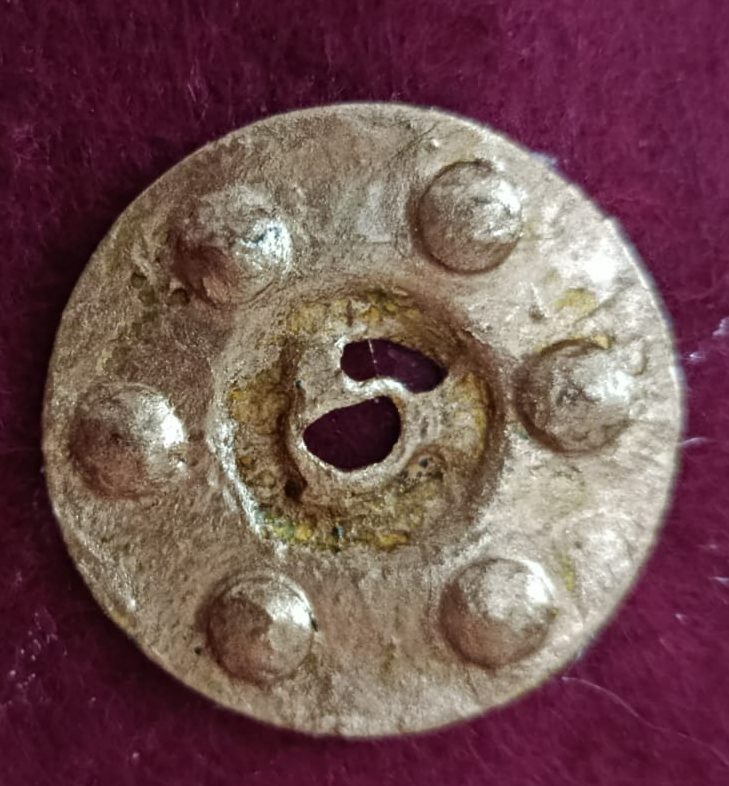
Gold Disc Brooch
This ornate piece is believed to have been created through hammering a thin sheet of gold into a circular shape before securing it with a pin.
During the Bronze Age, many brooches and pendants were decorated with geometric patterns, concentric circles and other motifs.
Set of Four Gold Disc Brooches
These brooches were created by casting molten gold into a mould. A garnet stone was inserted into the casting, creating a fluid flow of gem and metal. The brooch was then secured with a pin.
Garnets are believed to be one of the earliest gemstones used in jewellery making.
Bronze Decorative Pendant
Made by twisting and looping bronze, this pendant would have been a valued piece of jewellery during the Bronze Age.
Like other pendants from this time, it was threaded with organic string and worn around the neck.
Bronze Decorative Brooch
Hailing from the Bronze Age, the brooch began as a strictly functional item used to secure clothing.
In Northern Europe in particular, it was a characteristic clothing accessory for fastening cloaks and tunics during the heavy winters.

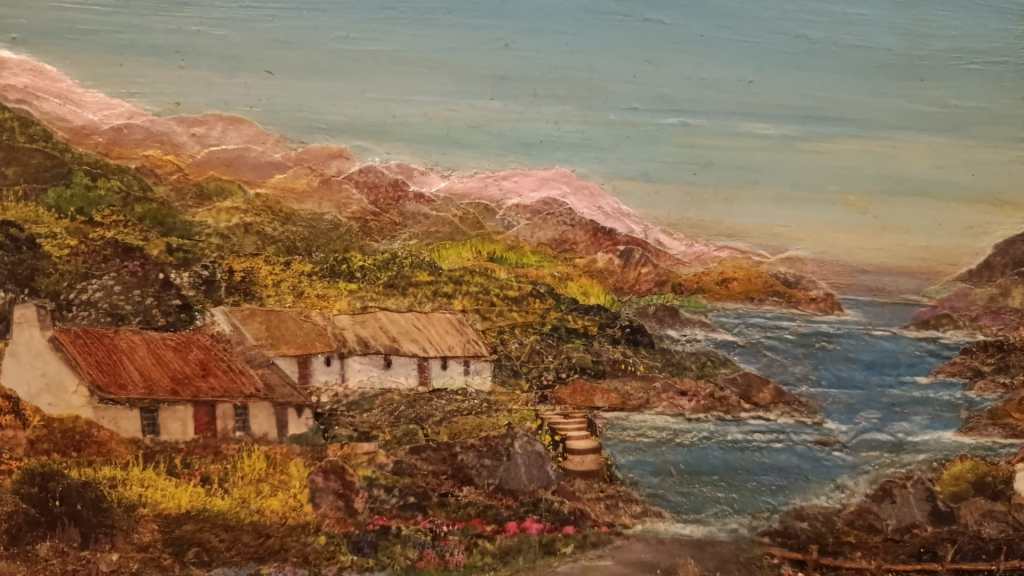
from The Slip Road, Eilean Nam Bruadar (artist’s impression, 2026)

